ESG and Robotics: How Cleaning Robots Support Sustainability Goals in Canadian Buildings
Water recycling, precise dosing, HEPA filtration, safer work and cleaning reports: how commercial robots can support environmental, social and governance goals.
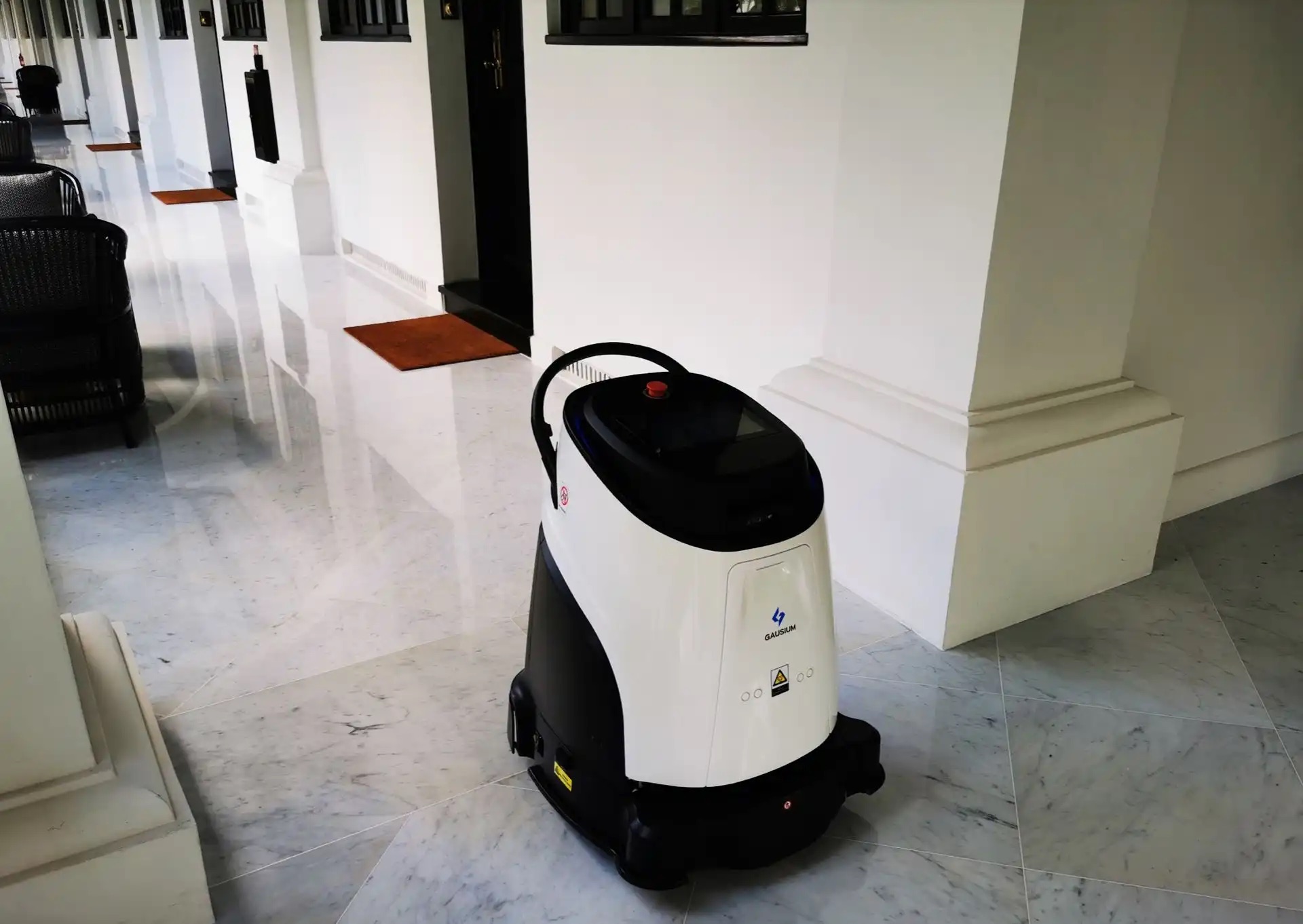
Commercial cleaning robots can support ESG goals in three practical ways: they can reduce water and detergent use through precise dosing and water recycling, they can make cleaning work safer and less physically demanding for staff, and they produce cleaning data that facility teams can use for reporting and audits. For facility managers, property owners, hospitals, restaurants and retailers in Toronto and across Canada, that makes robotics one of the more measurable ways to bring sustainability into day-to-day building operations.
This guide looks at what the published product information actually says, which robots offer which sustainability features, and how to approach ESG claims responsibly.
What does ESG mean for building cleaning?
ESG stands for Environmental, Social and Governance. In facility operations, cleaning touches all three:
- Environmental: water consumption, chemical and detergent use, wastewater, energy use and indoor air quality.
- Social: the health and safety of cleaning staff and building occupants, slip risks from wet floors, noise in occupied spaces and consistent hygiene in sensitive settings such as hospitals and senior residences.
- Governance: being able to show what was cleaned, when and how, with records that stand up to an internal review or a client audit.
Traditional mop-and-bucket cleaning is hard to measure on any of these. Robotic and smart cleaning equipment changes that, because water use, coverage and run-time are designed in and, in many cases, reported automatically.
How can cleaning robots reduce water and detergent use?
Several machines sold in Canada through SPARC publish specific water and chemical features:
- Water recycling. The Gausium Scrubber 75 uses a built-in multi-stage filtration system that recycles and reuses water, which Gausium states cuts freshwater use by about 80%. The CenoBots L50 has a 5-stage filtration system for water recycling, which CenoBots describes as resulting in significant water conservation.
- Precise detergent dosing. The PUDU BG1 Series has an AI-native auto-dosing system with 7 L tanks and millilitre-level accuracy that scales detergent strength to floor conditions. The L50 offers automatic detergent mixing, which CenoBots says significantly reduces detergent waste.
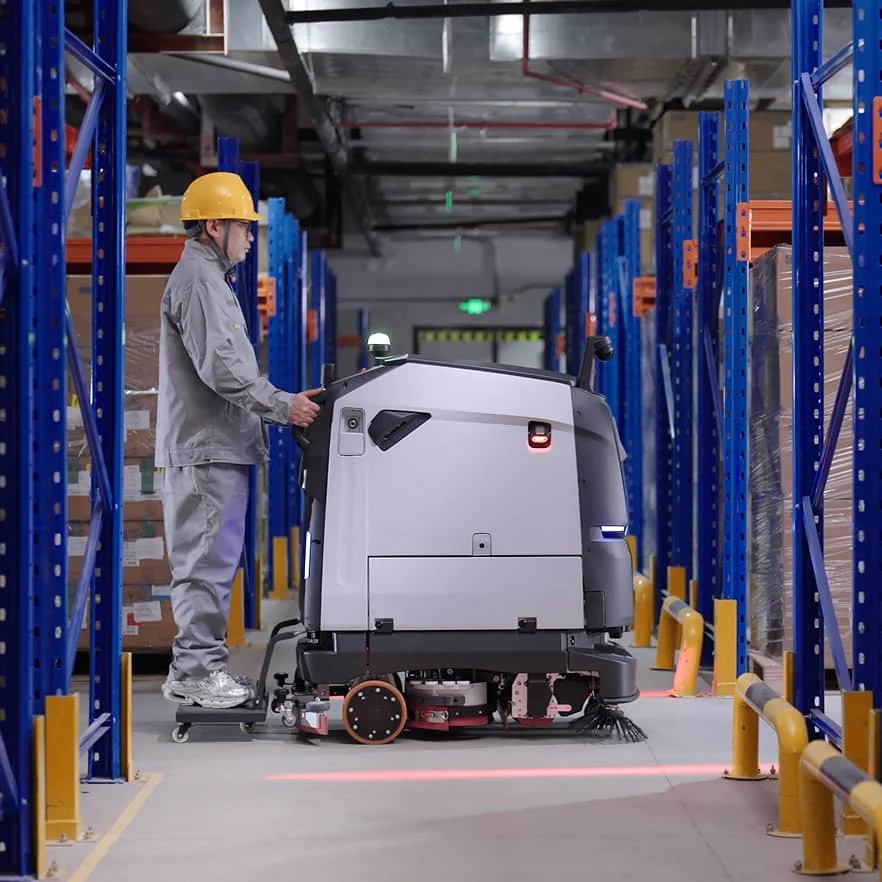
- Less water per clean. PUDU states that, compared to a conventional mop, the PUDU SH1 walk-behind scrubber dryer saves 80% on water and cleaning agent usage. The SPARC A1 uses precise control of water flow across its modes to reduce water consumption.
- Chemical-free options. The A1 uses electrolyzed water, which the brochure states kills 99.99% of germs, avoiding the use of chemical detergents.
- Cleaning only where needed. The PUDU CC1 Pro monitors cleanliness and switches to eco mode on clean areas and deep cleaning on dirty spots, saving energy and water.
These figures come from each manufacturer's published product information. Actual savings in a given building depend on floor types, soil levels, cleaning frequency and how the machines are configured, so they are best confirmed during a pilot.
Sustainability features by robot
The table below summarizes published sustainability-related features. It only includes values stated on each product's page.
| Robot | Type | Water and chemicals | Air, noise and safety | Data and reporting |
|---|---|---|---|---|
| PUDU SH1 | Cordless walk-behind scrubber dryer | 80% less water and cleaning agent vs a conventional mop | 72 dB(A) standard, 69 dB(A) ECO mode | PUDU Cleaning Report: duration, water usage, area cleaned |
| SPARC A1 | Walk-behind scrubber | Electrolyzed water; precise water-flow control | Below 60 dB; dries floors immediately after cleaning | Cloud management platform |
| Gausium Scrubber 75 | Robotic floor scrubber | Multi-stage water recycling, about 80% less freshwater | 20+ sensors; enhanced lighting | Gausium mobile app |
| CenoBots L50 | Scrubber-dryer robot | 5-stage filtration for water recycling; automatic detergent mixing | 32-beam 3D LiDAR; 150 m detection range | Mobile app with performance information |
| PUDU BG1 Series | Large scrubber-dryer robot | Auto-dosing with millilitre-level accuracy | Audio-visual alerts for pedestrians | PUDU Link app |
| Gausium Vacuum 40 | Robotic vacuum | Dry cleaning (vacuum, sweep, dust mop) | Medical-grade H13 HEPA filter | Gausium mobile app |
| PUDU MT1 Vac | Robotic vacuum | Dry cleaning | HEPA-grade filtration, over 98% of particles at 0.3 µm; optional HEPA 13 | PUDU Link |
| SPARC Ranger One | Cordless backpack vacuum | Dry cleaning | 4-stage HEPA 13 filtration; below 67 dB(A) | Not published |
What about indoor air quality and noise?
Indoor environmental quality is often part of a building's sustainability and wellness reporting. Dry-cleaning robots and vacuums contribute through filtration. The Gausium Vacuum 40 carries a medical-grade H13 HEPA filter that captures harmful particles and allergens. The PUDU MT1 Vac uses HEPA-grade filtration that captures over 98% of particles as small as 0.3 µm, with an optional HEPA 13 filter. The SPARC Ranger One backpack vacuum uses a 4-stage HEPA 13 filtration system. On outdoor and semi-outdoor sites, the PUDU MT1 uses high-flow negative pressure ventilation and a filter to trap particles in the debris box, preventing secondary pollution.
Noise matters in occupied offices, hospitals and hotels. Published figures include below 60 dB for the A1, 69 to 72 dB(A) for the SH1 depending on mode, and below 67 dB(A) for the Ranger One. Quieter equipment makes daytime cleaning more practical, which can reduce reliance on late-night shifts.
How do robots support the social side of ESG?
The "S" in ESG is about people. Cleaning robots can help in several ways:
- Fewer wet-floor hazards. Scrubber-dryers collect water as they clean. The A1, for example, uses 15 kg of brush pressure and 8000 Pa of suction to dry floors immediately after cleaning, reducing slip worries compared with mopping.
- Less repetitive, physically demanding work. Autonomous robots take on long, repetitive floor runs in lobbies, corridors and warehouses. Manual tools are also being designed for comfort, such as the Ranger One's ergonomic harness and ambidextrous hose connector.
- More meaningful work for staff. When robots handle routine floor care, cleaning teams can focus on detail work, high-touch surfaces, washrooms and responding to spills.
- Consistent hygiene. Robots follow the same route and settings every time, which helps in hospitals, senior residences and food service where consistency matters.
Why does cleaning data matter for governance?
Governance depends on evidence. Many robots now record what they do. The PUDU SH1 sends post-cleaning reports with cleaning duration, water usage and area cleaned. The PUDU CC1 provides real-time notifications of cleaning time and area and automatically generates a cleaning report. The CC1 Pro and other PUDU robots are managed in the PUDU Link app, and the A1 includes cloud management.
For sites running several brands, SPARC's robotics platform integrates multiple robot brands into one dashboard with centralized fleet management, real-time monitoring, performance analytics and customized reports. That kind of record makes it easier to show cleaning frequency and coverage to tenants, auditors or head office, and to back up sustainability reporting with data rather than estimates.
How should you approach ESG claims for robots?
Robots are a tool, not an ESG strategy on their own. A few practical steps keep claims credible:
- Set a baseline. Record current water, detergent and labour hours for the areas you plan to automate.
- Pilot before you report. Run a pilot and compare the robot's reported data with your baseline before publishing any savings.
- Use manufacturer figures carefully. Published percentages describe the machine's design. Present them as the manufacturer's figures, not as guaranteed results for your building.
- Plan for the full life cycle. Good maintenance, genuine parts and modular, quick-release components help equipment last longer.
Local deployment and support in Canada
SPARC Technologies is the official Gausium and Pudu distributor in Canada, with 1,000+ deployments across 35+ industries and locally based teams in the Greater Toronto Area, Montreal, Ottawa, Calgary, Edmonton, British Columbia and beyond. Support includes 24-hour online assistance, a guaranteed 48-hour on-site response, an in-house engineering team and an extensive spare-parts inventory. SPARC was named the 2025 Top Autonomous Robotics Solution in Canada.
To compare options for your buildings, explore the cleaning robots range or talk to the SPARC consulting team about a site assessment and pilot.