Commercial Cleaning Robots in Toronto and the GTA: A Practical Buyer's Guide
Which cleaning robot fits an office tower, a mall, a hospital or a warehouse in the GTA, what to check before you buy, and how a deployment actually runs.

A commercial cleaning robot is an autonomous machine that scrubs, sweeps, vacuums or mops large floor areas on a schedule, with little or no operator input. For buildings in Toronto and the Greater Toronto Area, the right choice depends on three things: your floor types, the size and layout of the space, and how much local support you can count on once the robot is running. This guide walks through each one so you can shortlist the right machine for your site.
SPARC Technologies is the official Canadian distributor for Gausium and Pudu, with more than 1,000 deployments across 35+ industries and locally based teams in the Greater Toronto Area, Ottawa, Montreal and across Canada. The advice below comes from that deployment work.
Which cleaning robot suits which kind of building?
Most commercial buildings in the GTA fall into a handful of patterns. Start with the one closest to yours.
Offices and corporate campuses
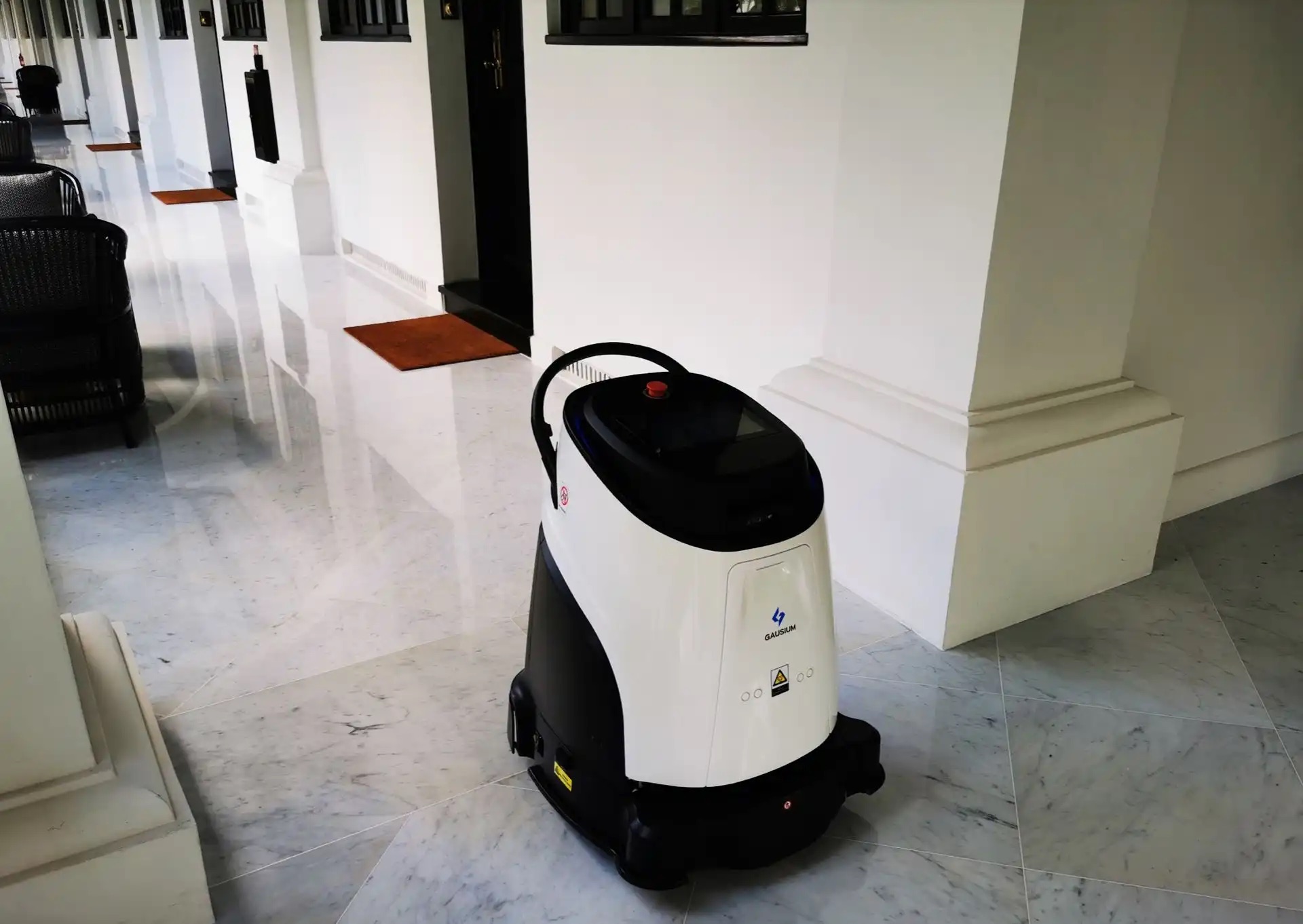
Offices usually mix carpeted work areas with hard-floor lobbies, corridors and kitchens. A 4-in-1 robot that can vacuum carpet and scrub hard floors covers both. The Gausium Phantas sweeps, vacuums, scrubs and dust-mops, is compact enough for tight corridors (minimum pass width 650 mm) and has a quiet mode at or below 60 dB for cleaning during working hours. The PUDU CC1 Pro offers the same four modes with 15 L clean and dirty water tanks and optional automatic water refill and drainage. For carpet-heavy floors, the Gausium Vacuum 40 is built for vacuuming, with a 400 mm cleaning width (720 mm with side brushes).
Shopping malls, transit hubs and large retail
Big open hard floors reward wide cleaning paths and large tanks. The PUDU BG1 Series sweeps and scrubs in one pass, with a 550 mm scrubbing width, 75 L clean and 60 L waste water tanks, and up to 7.5 hours of run-time. The Gausium Marvel carries 80 L clean and 70 L waste water tanks and can scrub, sweep or dust-mop. Both are designed for long, uninterrupted runs across concourses and food courts.
Hospitals, clinics and long-term care
Healthcare floors need consistent, documented cleaning in corridors that stay busy around the clock. Mid-size scrubber-dryers such as the Gausium Mira or Gausium Omnie handle long corridors, while compact 4-in-1 robots handle patient-area hallways. Look for robots with 3D sensing for obstacle avoidance, because hallways often have carts, wheelchairs and people moving through them.
Warehouses, manufacturing and car parks
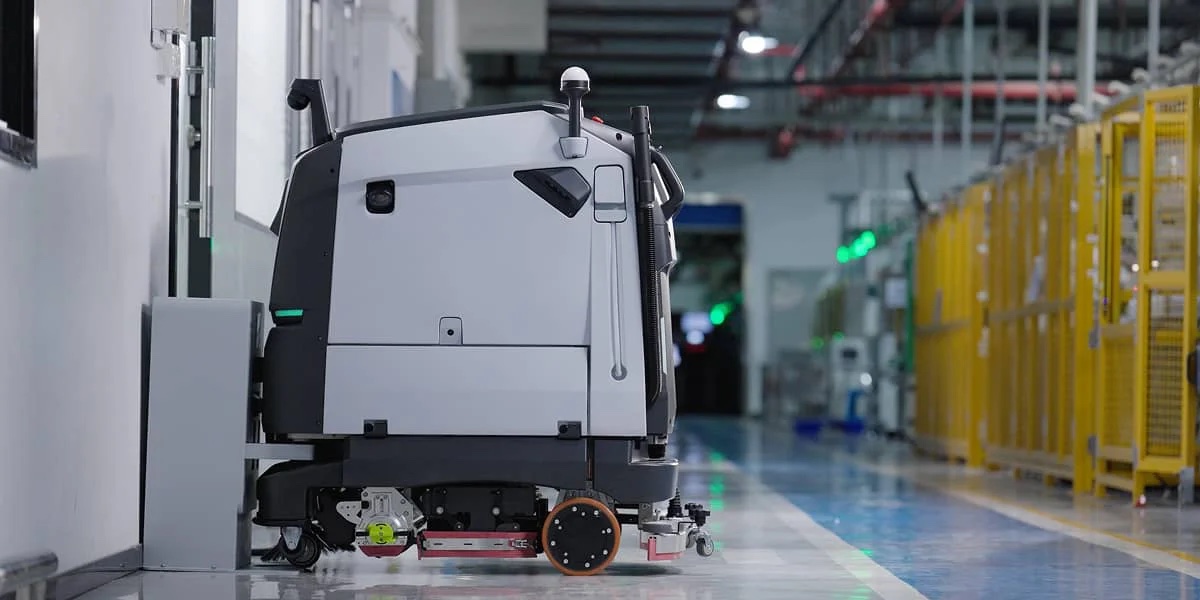
Industrial floors are mostly about debris rather than spills. Robotic sweepers such as the PUDU MT1 (35 L trash bin, up to 1,800 m²/h in standard cleaning mode) and the Gausium Beetle (45 L trash bin) are built for this. Where heavy scrubbing is needed, the Gausium Scrubber 75 has a 750 mm cleaning width, 45 kg brush pressure and a maximum scrubbing productivity of 3,000 m²/h.
Condominiums, residential towers and schools
Condo lobbies, amenity floors and school hallways tend to be smaller and spread across several floors. Compact robots that can ride elevators are the practical choice. The CC1 Pro and BG1 both support optional e-gate and elevator control, so a single robot can serve more than one floor.
What should you evaluate before buying a cleaning robot?
Spec sheets can look similar. These are the points that decide whether a robot works well in your building.
- Floor types. List every surface: vinyl, ceramic, polished concrete, epoxy, natural stone, low-pile and high-pile carpet. Scrubber-dryers suit hard floors; carpet needs vacuuming. Mixed buildings usually need a multi-mode robot or two complementary machines.
- Area and schedule. Compare the area you need cleaned per shift with the robot's practical cleaning efficiency, not just the theoretical maximum. For example, Gausium lists Phantas at 350–700 m²/h in practice, well below its theoretical figures.
- Path clearance and turning space. Measure your narrowest doorways and aisles. A robot that needs 850 mm to pass will not get through a 750 mm gap.
- Elevators, doors and gates. If the robot has to change floors or pass access-controlled doors, confirm elevator and e-gate integration early. It affects both the robot you choose and the work needed on your building systems.
- Water, charging and docking. Scrubber-dryers need clean water in and dirty water out. Workstations or docking stations that refill, drain and charge automatically remove most of the daily handling. Check where they will go and what plumbing and power they need.
- Noise. If cleaning happens while people are in the building, look for quiet modes and published noise levels.
- Support and parts. Ask who will service the robot, how fast they respond and where parts come from. Downtime costs more than most other line items.
How does a cleaning robot deployment work?
A good deployment follows a predictable path. At SPARC, it typically runs like this:
- Site assessment. We walk the building, note floor types, traffic patterns, narrow points, elevators and where a dock or workstation can go.
- Robot selection. We match one or more robots to the areas, schedules and surfaces, rather than forcing one model onto every floor.
- Mapping and routes. The robot maps the space. We set cleaning zones, no-go areas, schedules and modes for each area.
- Integration. Where needed, we connect elevators, e-gates and docking or water stations.
- Training. Your team learns daily checks, consumable changes and how to start, pause and redirect the robot.
- Ongoing support. SPARC provides 24-hour online assistance, a guaranteed 48-hour on-site response, an in-house engineering team and genuine spare parts.
Do cleaning robots replace cleaning staff?
In practice, robots take over the long, repetitive floor runs: the same corridors, lobbies and open areas every shift. Your team then spends more time on work that needs judgement, such as washrooms, spot cleaning, touch points, inspections and handling spills as they happen. Many facility teams use robots to keep up with large floor areas without stretching staff thinner.
Why does local support matter in the GTA?
A cleaning robot is a working machine with brushes, squeegees, filters and batteries. When something needs attention, you want a technician who can reach your building quickly, not a ticket queue overseas. SPARC has a team based in the Greater Toronto Area, plus teams in Ottawa, Montreal, Calgary, Edmonton, British Columbia and other regions, so sites across Ontario and Canada get the same response commitments.
SPARC was named the 2025 Top Autonomous Robotics Solution in Canada, and received 2024 Excellent Service Performance Partner recognition from both Gausium and Pudu.
Where to start
Start with a short list of the areas you most want covered, your floor types and your narrowest passage. From there, compare two or three robots side by side. You can browse the full range on our cleaning robots page, read our guide to choosing a floor cleaning robot, or contact our team to book a site assessment anywhere in Toronto, the GTA or across Canada.